Food Printing
The process of food printing involves using computer software to create personalized food. This is achieved through a Python script that produces a G-code file, along with certain parameters that are set in the 3D printer. These parameters include layer height, nozzle speed, extrusion rate, and infill, which together result in the extrusion of a 3D model through a nozzle. To ensure optimum results, material ingredient properties are studied through rheological analysis, which involves analyzing factors such as viscosity and elastic moduli.

My Role
Coding
As the leader of a team of four, I spearheaded the development of a series of Python programs aimed at creating G-code files. These files were intended for use in food printing a wide array of shapes and complex geometries.
Printing
To bring our designs to life, we relied on a customized CNC food printer. Throughout the printing process, we experimented with different material ingredients to achieve the desired results.
Team Members
Alex Ivan Ortega, Jiahao Chen, Avinash Chaudhary
Timeframe
4 weeks
Test 1: Square Print
The initial assessment of the CNC food print machine is represented by the simulated G-code paths below.
Material: Cream Cheese
Simulated G-code Path 1

Simulated G-code Path 2
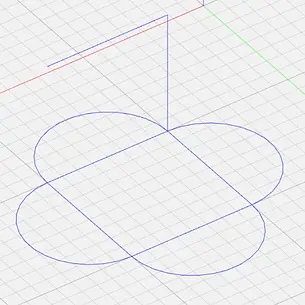

Python
The following Python script generates a multilayer print.
Simulated G-code Path 3

Test 2: Pyramid Print
Images depict a pyramid print. 1st attempt used 15s heated material, while 3rd attempt used 5s heated material. Factors like temperature, syringe misalignment, and material consistency affected the results.
Material: Cream Cheese
Attempt 1

Attempt 2


Python
The following Python script generates a pyramid.
Attempt 3

Test 3: Multi-Material Print
The picture displays a print that uses multiple materials. The print experienced problems with extrusion consistency, which might be attributed to material properties and temperature.
Material: Cream Cheese & Peanut Butter
Attempt 1

Simulated G-code Path

Final Project: Creative Spirograph Print
We draw inspiration from Mount Fuji and cherry blossoms in Japan to create a dessert. The challenge lies in controlling the injection of raw materials with an injector. As it is a liquid mixture, we need to control the flow rate in advance to ensure that it does not become watery or runny when printing different parts.
Material: Pink Frosting
Base

Simulated G-code Path

Mount Fuji